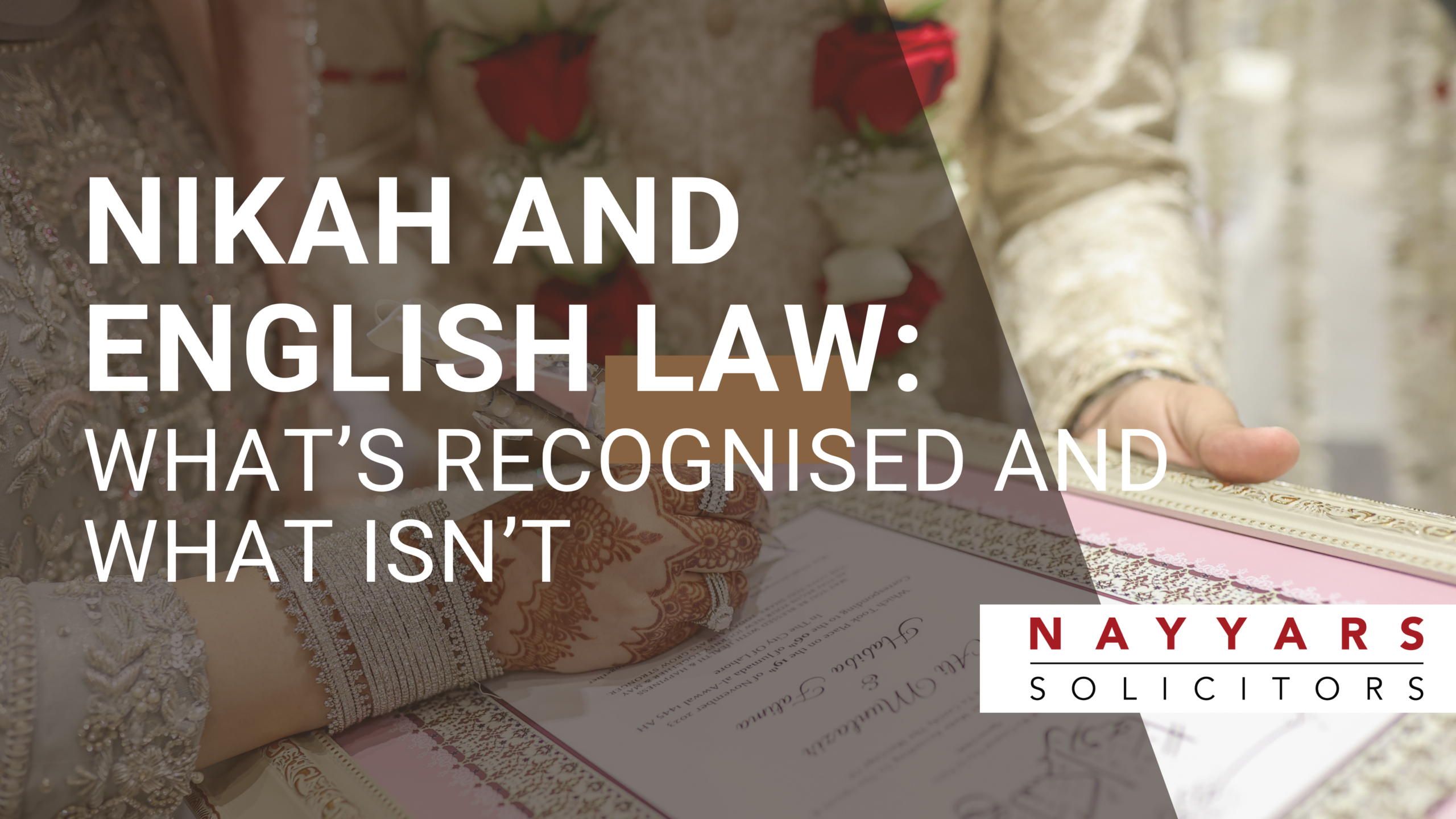



Is Islamic Nikah Recognised in UK Law?
A Clear Legal Guide from Nayyar’s Solicitors
For many Muslim couples in the UK, the Nikah ceremony represents a sacred and deeply meaningful commitment. However, an important legal question frequently arises: Is an Islamic Nikah recognised under UK law?
The short answer is that a Nikah alone is not automatically recognised as a legally valid marriage in England and Wales. Understanding the distinction between religious validity and civil recognition is essential to protect your financial rights, inheritance position, and legal status.
At Nayyar’s Solicitors, our experienced family law team regularly advises clients on Muslim marriage and UK legal recognition. In this guide, we explain when a Nikah is legally recognised, the risks of non-recognition, and how to protect your future.
Key Takeaways
- A standalone Nikah conducted in the UK is not automatically recognised as a legal marriage.
- Religious validity does not equal civil legal protection.
- Without civil registration, you may not have rights to financial remedies upon separation.
- A civil ceremony is usually required to secure full legal recognition.
- Early legal advice can prevent serious financial and legal complications.
Religious Marriage vs Civil Marriage in the UK
In the UK, marriage operates on two separate levels:
Religious Marriage (Nikah): A contract conducted according to Islamic principles. It is spiritually binding and culturally significant but does not automatically create legal rights under UK civil law.
Civil Marriage: A marriage recognised by the state under the Marriage Act 1949. It provides enforceable legal rights relating to property division, pensions, maintenance, inheritance, and divorce.
For a Nikah to be legally valid in England and Wales, it must comply with statutory formalities — including registration, authorised premises, and proper documentation.
When Is a Nikah Legally Recognised?
A Nikah may be legally recognised if it takes place in a mosque that is registered for marriages and is conducted in accordance with UK marriage law requirements. This typically requires:
• The ceremony taking place in a registered building
• An authorised person or registrar present
• Proper legal declarations being made
• Registration of the marriage
• At least two witnesses
If these requirements are not met, the Nikah is likely to be considered a non-legally binding ceremony under UK law.
What Happens If Your Nikah Is Not Legally Recognised?
- You cannot apply for a civil divorce through the UK courts.
- You will not have automatic claims for spousal maintenance.
- You may not have rights to share property, pensions, or other matrimonial assets.
- You will not automatically inherit as a spouse if your partner dies intestate.
- Your legal position may resemble that of an unmarried cohabiting partner.
How to Ensure Full Legal Protection
To ensure your marriage is both religiously meaningful and legally secure, couples are strongly advised to also undertake a civil marriage ceremony.
This can take place:
• Before the Nikah at a registry office
• On the same day if the mosque is registered and an authorised person is present
• Shortly after the Nikah to formalise legal recognition
By completing both ceremonies, you benefit from spiritual validity and full legal protection under UK family law.
Why Contact Nayyar’s Solicitors?
At Nayyar’s Solicitors, we combine legal expertise with cultural understanding. We recognise the importance of Islamic marriage while ensuring your legal rights are fully protected.
Our family law team provides:
• Clear advice on whether your Nikah is legally recognised
• Practical guidance on securing civil recognition
• Strategic advice if your relationship has broken down
• Representation in financial disputes and child arrangements
• Sensitive, confidential and client-focused support
We act proactively to safeguard your financial security and long-term interests.
Frequently Asked Questions
Does a Nikah certificate prove legal marriage?
Not necessarily. A Nikah certificate proves religious marriage, but it is only legally valid if UK statutory requirements were followed.
Can I get a divorce if my Nikah is not legally recognised?
No. If the marriage is not legally recognised, there is no civil marriage to dissolve under UK law.
What is a void marriage?
A void marriage is one that fails to meet legal requirements and is treated as never having legally existed.
Are overseas Nikahs recognised?
Some overseas marriages may be recognised if they complied with the laws of the country where they were performed. Legal advice is essential to determine recognition.
Conclusion
While an Islamic Nikah carries profound religious significance, it does not automatically provide legal protection under UK law. To safeguard your rights regarding property, finances, inheritance and divorce, civil recognition is essential.
If you are unsure about the legal status of your marriage or need advice following separation, contact Nayyar’s Solicitors today. Our experienced family law team is here to provide clear, practical and culturally aware legal guidance.